Short answer: in 2026 a single-purpose AI agent with real integrations typically costs $15,000–$75,000 to build. A multi-step or multi-agent system with compliance requirements costs $80,000–$250,000 or more. A simple LLM-powered workflow automation can start below $10,000. On top of the build, budget roughly 15–30% of the build cost per year to run and maintain it.
Published estimates vary wildly, from $10,000 to over $300,000, because "AI agent" covers everything from a chatbot that calls one API to an autonomous system acting across a dozen tools. Below is how we scope agents at ZetsApp, so you can place your own idea on the scale.
AI agent cost by complexity
| Type | What it does | Typical build cost | Typical timeline |
|---|---|---|---|
| Workflow automation | One LLM step inside a fixed flow, for example classify an email and draft a reply | $3,000 – $10,000 | 1 – 3 weeks |
| Single-purpose agent | Chooses between several tools to finish one job, for example a support agent that looks up orders and issues refunds under a limit | $15,000 – $75,000 | 4 – 10 weeks |
| Multi-step / multi-agent system | Plans, delegates to specialised agents, works across many systems, keeps memory | $80,000 – $250,000+ | 3 – 6 months |
| Regulated enterprise agent | Any of the above with audit trails, data residency and formal evaluation, for example in finance or healthcare | Add 25 – 60% | Add 1 – 3 months |
These are planning ranges, not quotes. The fastest way to a reliable number is a short discovery phase that fixes scope, integrations and success criteria.
What drives the price
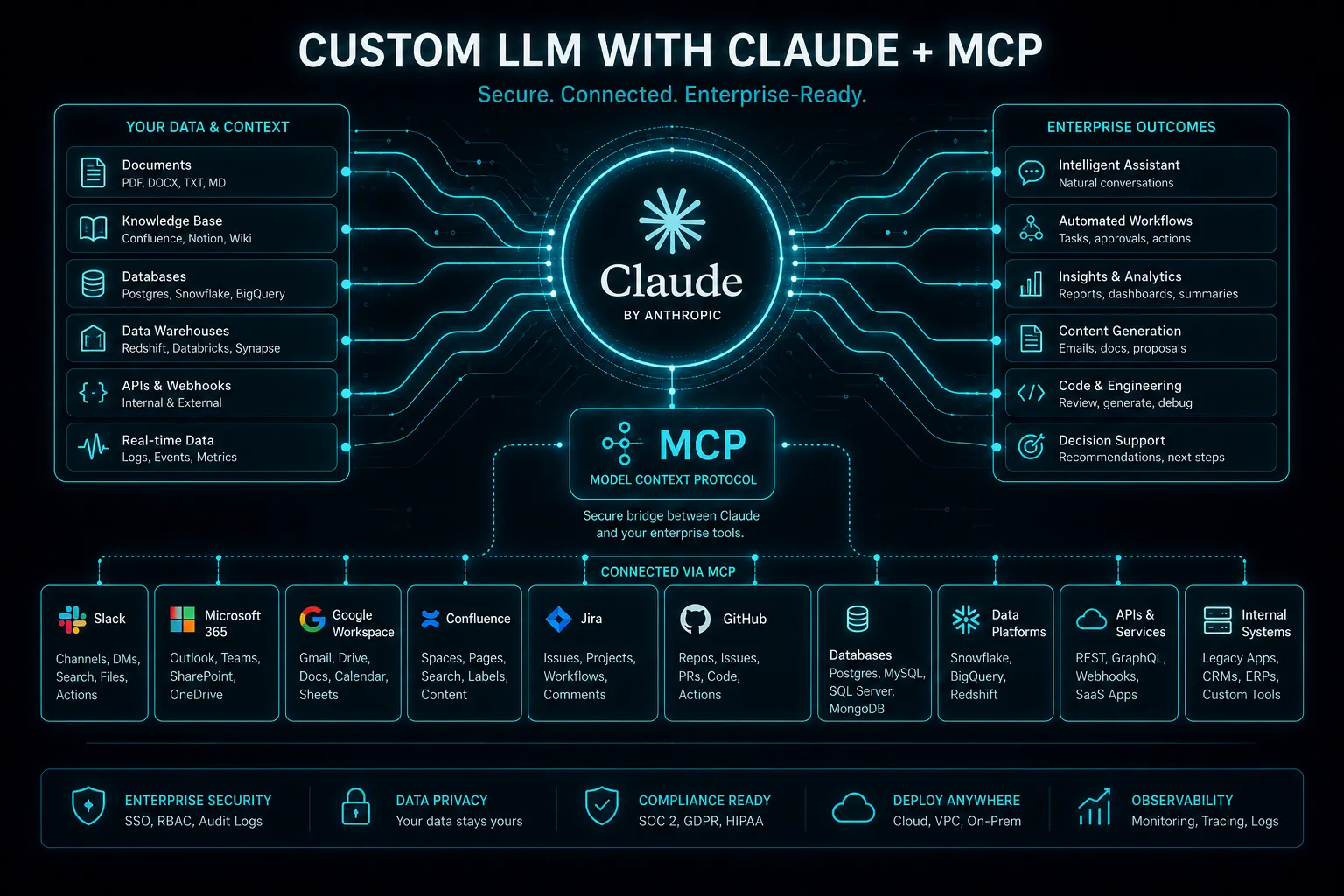
- Number and quality of integrations. Each system the agent touches needs authentication, error handling and tests. A clean REST API is cheap; a legacy system with no API is not. Standards such as the Model Context Protocol (MCP) reduce this cost when your tools support it.
- Autonomy level. An agent that only drafts actions for a human to approve is far cheaper to make safe than one that acts on its own.
- Knowledge grounding. If the agent must answer from your documents, you need a RAG pipeline: ingestion, chunking, a vector index and retrieval tuning.
- Evaluation. Production agents need a test set of real cases and automated scoring. Skipping this is the most common reason pilots never reach production.
- Security and compliance. Permission scoping, prompt-injection defences, PII handling, audit logs, and regulatory requirements such as GDPR or the EU AI Act.
- Interface. Running inside Slack, Teams, WhatsApp or your existing app is usually cheaper than building a new front end.
The running costs most estimates leave out
| Cost line | What it covers | Typical range |
|---|---|---|
| Model usage | LLM API tokens. Agents call the model several times per task | $50 – $5,000+ per month, depending on volume and model |
| Hosting and data | Servers, vector database, queues, logs | $50 – $1,000 per month |
| Monitoring and evaluation | Tracing, quality dashboards, regression tests when models change | A few hours to a few days per month |
| Maintenance | Tool and API changes, new edge cases, prompt and model upgrades | Often 15 – 30% of build cost per year |
Model usage is the line that surprises people. Estimate it early: tasks per day × model calls per task × tokens per call × price per token. Then design to reduce it, for example by routing simple steps to a smaller, cheaper model.
How to reduce the cost without reducing quality
- Start with a human in the loop. Ship the agent as an assistant that proposes actions, and remove approvals step by step as accuracy is proven.
- Automate one workflow end to end before building a general-purpose agent.
- Use existing platforms for chat, voice and messaging channels instead of building them.
- Mix models. Use a frontier model only where reasoning is hard, and smaller models for classification and extraction.
- Define success numerically before writing code, for example "resolves 60% of tier-1 tickets with under 2% wrong refunds".
Build, buy or both?
Buy when a mature product already does the job, such as an AI receptionist or a website chatbot. Build when the agent must work inside your own systems, rules and data, which is where it creates an advantage competitors cannot buy. Many businesses do both: they buy the channel and build the logic behind it. For the architectural choice between agents, RAG and fine-tuning, see our decision framework.
ZetsApp scopes and builds production agents with a fixed-scope quote after a short discovery phase. See our AI development services.
Frequently asked questions
How much does it cost to build a simple AI agent?
A simple LLM-powered workflow automation typically costs $3,000–$10,000, and a single-purpose agent that uses several tools with proper integrations and testing typically costs $15,000–$75,000 in 2026.
What does it cost to run an AI agent each month?
Running costs are mainly model API usage, hosting and monitoring. They range from under $100 a month for low-volume internal tools to several thousand dollars for high-volume customer-facing agents. Plan roughly 15–30% of the build cost per year for maintenance.
How long does it take to build an AI agent?
A focused workflow automation takes one to three weeks, a single-purpose agent four to ten weeks, and a multi-agent enterprise system three to six months or more.
Why do so many AI agent pilots fail to reach production?
The usual causes are unclear success criteria, no evaluation set, too much autonomy too early, and underestimated integration and security work. Starting with a human-approved assistant and measuring accuracy avoids most of them.
Is it cheaper to use an off-the-shelf AI agent?
For common jobs such as phone answering, website chat and scheduling, yes. Custom agents are worth it when the work depends on your own systems, data and rules.