Introduction
If you've ever wrestled with streaming pipelines choking on data floods, you know the pain – latency spikes, dropped messages, the works. Enter Apache Kafka, the beast that's redefined fast data movement in distributed systems. As a dev who's tuned Kafka clusters through countless late-night deploys, I can attest: its performance isn't hype; it's engineered brilliance. We're talking handling gigabytes per second without breaking a sweat, powering everything from real-time analytics to event-driven apps.
Here's the thing: Kafka's secret sauce boils down to two genius decisions that flip traditional bottlenecks on their head. You might wonder, in an era of flashy in-memory stores, why does Kafka crush it with humble disks? In this post, we'll unpack sequential I/O's append-only wizardry and the zero copy principle's efficiency hacks. No fluff – just the nuts and bolts from someone who's lived the throughput wars. By the end, you'll see why Kafka remains my go-to for high-volume data. Let's stream ahead!
The Core Challenge: Moving Massive Data Without the Drag
Picture a firehose of logs, metrics, or user events – billions daily. Traditional systems grind under random reads/writes, but Kafka laughs it off. Why? It rethinks data as immutable logs, not mutable tables. In my experience scaling e-commerce feeds, this shift from chaos to order is transformative, enabling cheap, long-term storage without performance hits.
The frustration pre-Kafka? Databases optimized for updates bogged down on streams, costing fortunes in hardware. Kafka's design sidesteps that, focusing on throughput over transactional perfection. It's why companies like LinkedIn (its birthplace) swear by it – efficiency at scale isn't optional; it's survival.
Sequential I/O: The Power of Append-Only Logs
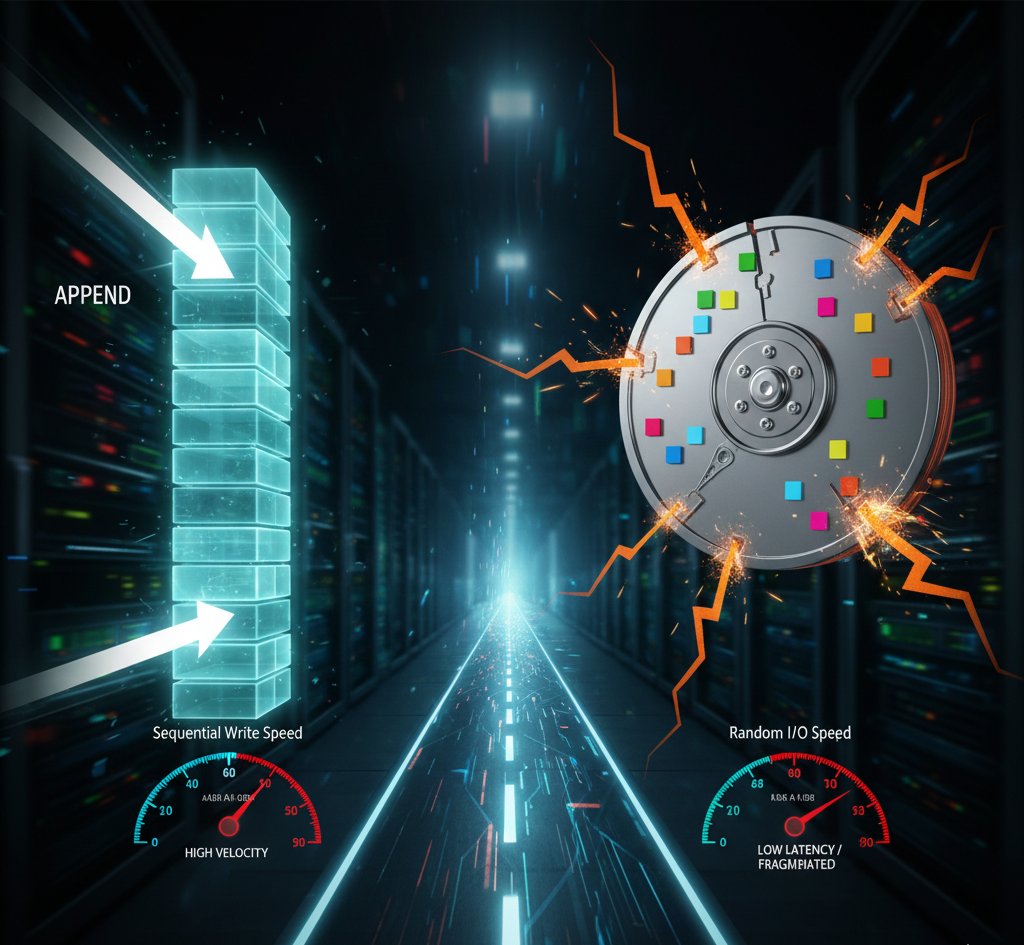
Let's geek out on the first pillar: sequential I/O via append-only logs. Kafka treats data as a never-ending journal – new messages tack on the end, no overwrites or inserts. This plays to disks' strengths: sequential writes scream at hundreds of MB/s on modern hardware, dwarfing random access's sluggishness.
You might ask, why disks over RAM? Because they're dirt cheap and persistent. I've run Kafka on HDDs holding weeks of data, where SSDs would bankrupt you. The magic? OS page caching keeps hot data in memory, but cold stuff stays on disk without thrashing. Compare that to random-write hell in traditional DBs – it's like comparing a highway to a pothole-ridden alley.
In practice, this lets consumers read at their pace, replaying history for debugging or recovery. From my ops days, it's a lifesaver during outages – no data loss, just rewind and go.
Zero Copy Principle: Eliminating Wasteful Data Shuffles
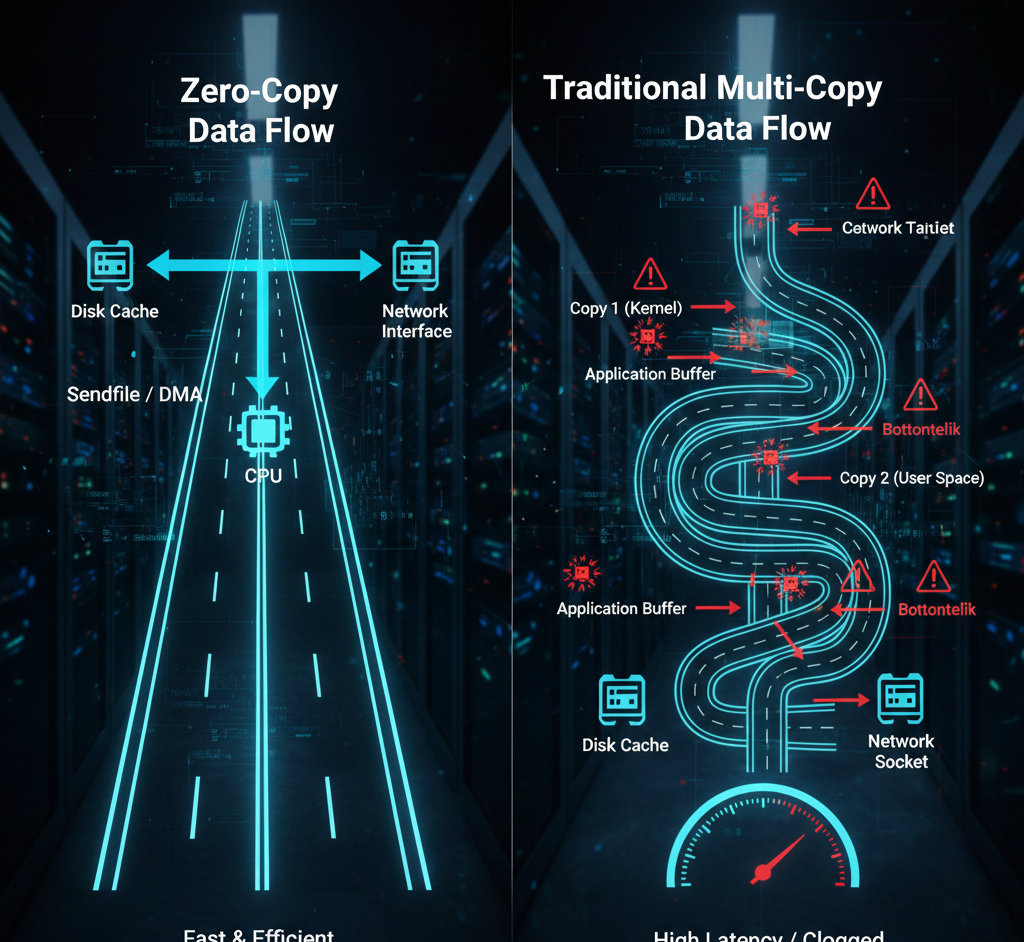
Now, the second turbo-boost: zero copy. When shipping data from disk to network, naive approaches copy it multiple times – disk to kernel buffer, kernel to app, app back to kernel socket, then to NIC. That's four copies, chewing CPU and time.
Kafka says nah: using sendfile() or similar syscalls, it transfers straight from OS cache to NIC buffer – one copy, zero app involvement. Add DMA (Direct Memory Access), and CPU chills while hardware handles it. Efficiency skyrockets; I've seen throughput double in network-bound setups.
Why revolutionary? In high-volume scenarios, like IoT streams, it slashes overhead, letting modest hardware punch above weight. Drawback? It's OS-specific, but Kafka abstracts that away. Trust me, debugging copy-induced lags pre-zero copy was a nightmare – this principle is pure gold.
Conclusion
Summing it up, Kafka's blistering speed stems from sequential I/O's disk-friendly logs and zero copy's lean transfers – designs that prioritize volume over complexity. In my book, it's why Kafka endures in 2026's data deluge, outpacing fancier rivals for real-world wins. If you're building streams, start here; the performance gains are addictive.