
Introduction
I still remember the 3 a.m. page that woke me up in 2024 when a single database node died and took down the entire payment service for 47 minutes. That incident cost the company real money and taught me a permanent lesson: fault tolerance isn’t a nice-to-have feature — it’s table stakes for any system that matters.
In 2026, with microservices, global users, and AI workloads pushing systems to their limits, building fault-tolerant architectures is non-negotiable. This post gives you the complete, production-hardened framework I use today: replication, redundancy, failover, load balancing, graceful degradation, and monitoring — all tied together with real AWS patterns I’ve deployed at scale.
The Core Philosophy: Design for Failure
The fundamental mindset shift is simple but powerful: assume everything will fail, then build accordingly. Netflix’s famous Chaos Monkey and Google’s Site Reliability Engineering principles all stem from this idea.
Fault tolerance is not about preventing failures (impossible at scale), but about containing them so users barely notice.
1. Replication, Redundancy & Failover — The Foundation Trio
Replication
Make multiple identical copies of critical data or services.
- Database replication (PostgreSQL streaming, MySQL Group Replication, DynamoDB Global Tables)
- Multi-region data replication for disaster recovery
Redundancy
Have extra capacity ready to take over.
- Active-Active: All instances serve traffic simultaneously (best for performance)
- Active-Passive: Standby instances spin up only when needed (cheaper, slightly slower failover)
Failover
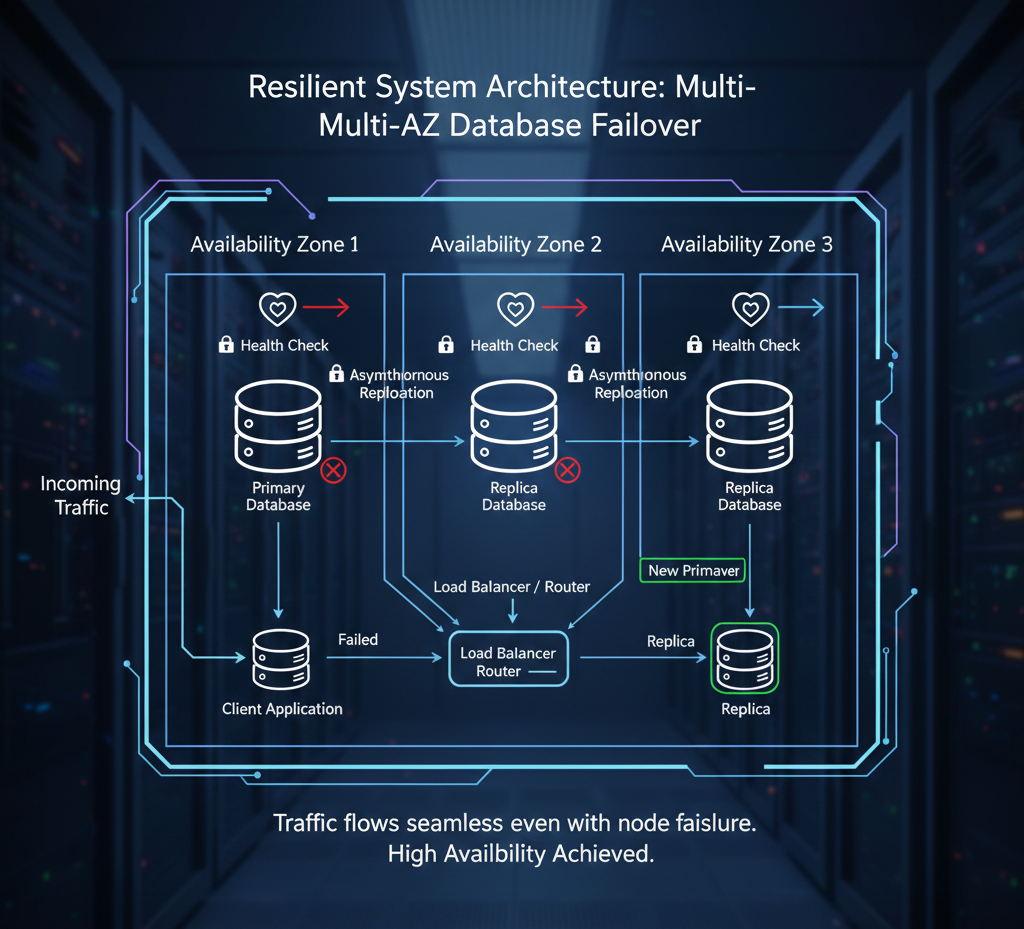
The automated switching mechanism. Modern systems use health checks + DNS routing (Route 53) or service mesh (Istio/Linkerd) for sub-second failover.
In my current setup, we run active-active across three availability zones with automatic failover under 8 seconds — users never see the blip.
2. Load Balancing: Preventing Single Points of Overload
Load balancers are the traffic cops of fault-tolerant systems.
Popular production choices in 2026:
- AWS ALB/NLB for cloud-native
- Nginx or HAProxy for self-managed
- Envoy in service mesh environments
Advanced patterns I use:
- Least connections + health checks
- Weighted routing for canary deployments
- Sticky sessions when needed (with care)
A well-designed load balancer turns a single server failure into “just another Tuesday.”
3. Graceful Degradation: Keeping the Lights On
When things break, not everything has to break at once.
Real techniques:
- Circuit breakers (Resilience4j, Istio, Polly) — stop calling failing services
- Bulkheads — isolate failures to specific user segments
- Feature flags — disable non-critical features during incidents
- Degraded modes — show cached data instead of failing completely
I once kept a major e-commerce checkout working during a payment gateway outage by falling back to “pay later” with cached pricing. Users barely noticed.
4. Monitoring, Alerting & Observability — The Nervous System
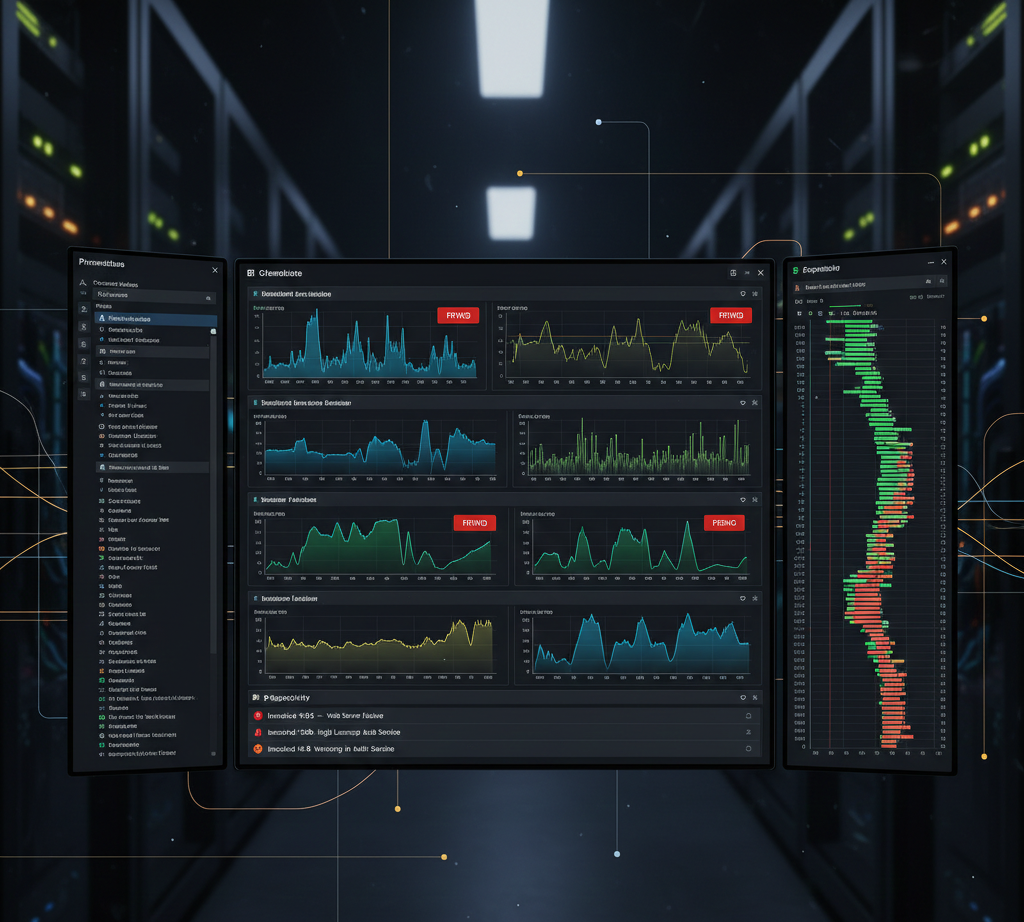
You can’t fix what you can’t see.
Modern stack I run in production:
- Metrics: Prometheus + Grafana
- Distributed Tracing: OpenTelemetry + Jaeger/Tempo
- Logging: Loki or ELK
- Alerting: PagerDuty + Opsgenie with on-call rotations and escalation policies
- SLO/SLI tracking with error budgets
The golden rule: Alert only on user-impacting issues. Everything else is noise.
Real-World AWS Implementation Example
A typical fault-tolerant setup I deploy today:
- Application deployed across 3+ Availability Zones
- Multi-AZ RDS or Aurora with read replicas
- Application Load Balancer with target group health checks
- Auto Scaling Groups with proper cooldowns
- Route 53 failover routing for disaster recovery
- S3 + CloudFront for static assets with multi-region replication
This architecture routinely achieves 99.99%+ uptime even during AWS regional issues.
Conclusion
Building truly fault-tolerant systems is hard, expensive, and never finished — but the alternative is far worse. The strategies in this post — replication, redundancy, failover, load balancing, graceful degradation, and obsessive monitoring — are what separate systems that survive black swan events from those that become cautionary tales.